Introduction to Digital Flame Photometry
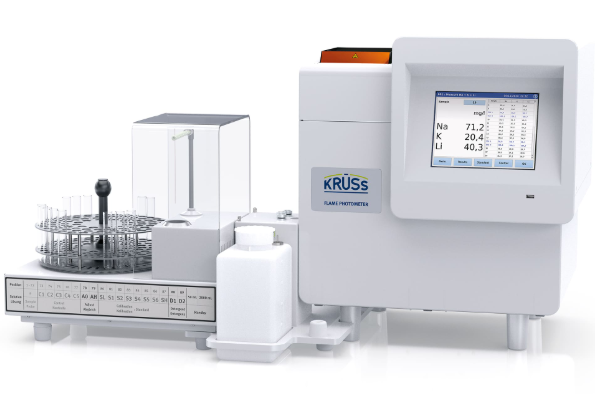
Flame photometry is a widely used analytical technique for detecting and quantifying metal ions such as sodium, potassium, calcium, and lithium. It is employed in clinical laboratories, pharmaceutical research, environmental testing, and industrial quality control. The evolution of this technology has led to the development of the digital flame photometer, which offers higher accuracy, faster analysis, and user-friendly operation compared to traditional instruments.
How a Digital Flame Photometer Works
A digital flame photometer works by aspirating a liquid sample into a flame, where the heat excites metal ions. As these ions return to their ground state, they emit light at characteristic wavelengths. The digital system then measures the intensity of this emitted light and displays the concentration of each element on a digital interface.
Modern digital flame photometers include features such as automated calibration, multi-element detection, and software integration for data management. These advancements ensure reproducible results, improved efficiency, and ease of use for laboratory professionals.
Applications in Clinical Laboratories
In clinical laboratories, digital flame photometers are used for electrolyte analysis in blood, serum, and urine. Accurate measurement of sodium, potassium, and calcium is vital for diagnosing and monitoring conditions such as dehydration, kidney disorders, and electrolyte imbalances.
Using a digital flame photometer ensures precise readings, reduces operator errors, and allows for faster sample processing, which is critical in busy diagnostic laboratories.
Applications in Pharmaceutical and Research Laboratories
Pharmaceutical laboratories use digital flame photometers for quality control, raw material testing, and formulation analysis. Monitoring metal ion concentrations helps ensure the safety, stability, and compliance of pharmaceutical products.
The automation and digital display of modern flame photometers reduce human error, streamline workflows, and increase laboratory productivity, making them indispensable in research and production environments.
See also: Technology en 2026 : IA embarquée, edge computing et protection des données
Environmental and Industrial Applications
Environmental laboratories use digital flame photometers to monitor metal ion concentrations in water, soil, and industrial effluents. Industrial applications include quality control in chemical production, food processing, and fertilizer analysis.
The precision, durability, and reliability digital flame photometer of a digital flame photometer make it a valuable instrument for handling large sample volumes and diverse analytical requirements.
Advantages of a Digital Flame Photometer
- High Accuracy: Provides precise and reproducible measurements.
- User-Friendly Interface: Digital displays simplify operation and data interpretation.
- Automated Features: Includes auto-calibration, multi-element detection, and software integration.
- Versatile Applications: Suitable for clinical, pharmaceutical, environmental, and industrial analyses.
Technological Advancements
Modern digital flame photometers are equipped with features such as programmable methods, digital readouts, temperature-stable flames, and integrated data logging. These technological improvements increase throughput, reduce errors, and make laboratory workflows more efficient.
Investing in a high-quality digital flame photometer ensures long-term reliability, technical support, and access to calibration services, which are essential for laboratories performing high-precision elemental analysis.
Best Practices for Laboratory Use
To ensure optimal performance and longevity of a digital flame photometer, laboratories should follow best practices including:
- Proper sample preparation
- Routine calibration and maintenance
- Adherence to standard operating procedures
- Regular performance verification
These practices maintain sample integrity, ensure accurate results, and extend the instrument’s lifespan, supporting consistent and reliable laboratory operations.
Conclusion
A digital flame photometer is an indispensable instrument for laboratories engaged in clinical diagnostics, pharmaceutical research, environmental monitoring, and industrial quality control. Its precision, automation, and versatility make it ideal for accurate and reproducible analysis.
Integrating a high-quality digital flame photometer into laboratory workflows enhances efficiency, supports reliable data generation, and strengthens analytical capabilities. For modern laboratories, this instrument is a cornerstone for precise elemental analysis and productivity.