In the healthcare industry, protecting sensitive patient information is not just good practice—it’s a legal requirement. With the growing volume of electronic health records (EHRs) and other digital patient data, healthcare organizations must ensure that retired or obsolete storage devices, such as hard drives, are destroyed in full compliance with HIPAA regulations. Companies utilizing advanced solutions like E-XPIRE emphasize the importance of secure, auditable hard drive destruction to mitigate the risks of data breaches and regulatory penalties.
HIPAA compliance for hard drive destruction is a critical component of a broader data security strategy. Simply discarding old drives without proper procedures exposes organizations to potential legal liabilities, reputational damage, and financial loss. Therefore, it is essential to implement a structured, compliant, and verifiable destruction process.
Understanding HIPAA and Data Security Requirements
The Health Insurance Portability and Accountability Act (HIPAA) establishes national standards for protecting sensitive patient health information. Organizations covered under HIPAA must implement administrative, physical, and technical safeguards to ensure the confidentiality, integrity, and availability of electronic protected health information (ePHI).
When a hard drive reaches the end of its lifecycle, it may contain ePHI, making secure destruction crucial. Failure to properly dispose of storage media can lead to unauthorized access, theft of sensitive data, and significant legal consequences.
Key requirements for HIPAA-compliant hard drive destruction include:
- Complete data removal: All data must be irretrievably destroyed.
- Documentation: A verifiable record of destruction is required.
- Security safeguards: The destruction process must prevent unauthorized access.
The Risks of Inadequate Hard Drive Destruction
Improperly destroyed hard drives pose multiple risks to healthcare organizations:
Data Breaches
Data left on discarded drives can be accessed by malicious actors, leading to identity theft, insurance fraud, and exposure of private health information.
Regulatory Penalties
HIPAA violations can result in substantial fines, legal actions, and corrective measures enforced by regulatory authorities.
Reputational Damage
Data breaches can damage the trust between healthcare providers and patients, potentially affecting patient retention and organizational credibility.
Financial Loss
Beyond fines, organizations may face costs associated with remediation, litigation, and incident management following a data breach.
Methods of HIPAA-Compliant Hard Drive Destruction
HIPAA does not prescribe a single method for destroying hard drives, but it mandates that the destruction be effective and verifiable. Organizations typically use one or more of the following methods:
1. Data Wiping
Data wiping involves using software to overwrite the entire drive with random data multiple times. This method ensures that the original information cannot be reconstructed.
- Pros: Retains the hardware for potential reuse.
- Cons: Time-consuming for large-scale decommissioning.
2. Degaussing
Degaussing uses a powerful magnetic field to disrupt the magnetic domains on a hard drive, rendering data unreadable.
- Pros: Effective for magnetic storage devices.
- Cons: Hardware becomes unusable. Not suitable for solid-state drives (SSDs).
3. Physical Destruction
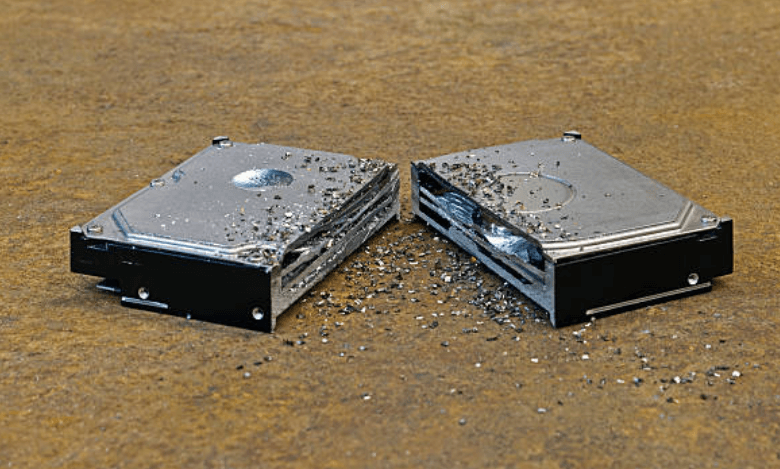
Physical destruction includes shredding, crushing, or incinerating hard drives, ensuring that the media is physically unusable and data is irretrievable.
- Pros: Provides the highest level of assurance for complete destruction.
- Cons: Permanent loss of hardware, requiring replacement if needed.
Steps for a Compliant Hard Drive Destruction Process
To ensure HIPAA compliance, organizations should implement a structured process for hard drive destruction:
1. Inventory and Classification
Identify all storage devices containing ePHI. Maintain a detailed inventory including device type, serial numbers, and location. Classify drives based on data sensitivity to determine the appropriate destruction method.
2. Data Sanitization
Before destruction, sensitive data should be sanitized using approved software methods. This adds an extra layer of security in case physical destruction is delayed or compromised.
3. Secure Transportation
If drives are transported to a destruction facility, ensure secure transport with tamper-evident containers, locked cases, and chain-of-custody documentation.
4. Verified Destruction
Whether using degaussing, shredding, or crushing, the destruction process must be documented. Certified destruction providers typically issue verification certificates detailing the method and date of destruction.
5. Documentation and Audit Trails
Maintain detailed records of each destroyed drive, including serial numbers, destruction method, date, and responsible personnel. This documentation is critical for HIPAA audits and regulatory compliance.
Best Practices for Hard Drive Destruction
Implementing best practices ensures both compliance and security:
Establish Clear Policies
Define organizational policies for hard drive lifecycle management, including retention, sanitization, and destruction.
Train Staff
Ensure that all personnel involved in data handling understand HIPAA requirements and follow proper destruction procedures.
Use Certified Destruction Vendors
When outsourcing, choose vendors that provide HIPAA-compliant destruction services with verifiable certificates and secure handling protocols.
Periodic Audits
Regularly audit the destruction process to identify gaps and ensure ongoing compliance.
Environmental Responsibility
Where possible, use eco-friendly destruction methods and recycling programs for shredded materials, balancing security with environmental sustainability.
See also: Data Portal Start 855 498 3921 Unlocking Phone Trace Technology
Challenges in Maintaining Compliance
Even with structured processes, organizations may face challenges:
- Rapid Technology Changes: New storage media types like SSDs require updated destruction methods.
- Volume Management: Large-scale data centers may have thousands of drives to process, requiring meticulous tracking.
- Human Error: Mishandling or skipping steps can compromise security and compliance.
Addressing these challenges requires robust planning, continuous staff training, and adherence to verified protocols.
Conclusion
HIPAA-compliant hard drive destruction is a critical component of data security in healthcare organizations. By combining structured policies, verified destruction methods, secure transportation, and meticulous documentation, organizations can safeguard sensitive information, maintain compliance, and protect their reputation.
Secure and compliant hard drive destruction is not a one-time task—it is an ongoing requirement as technology evolves and data volumes grow. Leveraging advanced solutions, such as those offered by E-XPIRE, provides the assurance that your organization’s sensitive data is handled securely and responsibly throughout its lifecycle.
For organizations looking to implement or improve HIPAA-compliant hard drive destruction processes, contact us today to ensure a secure, verifiable, and fully compliant solution tailored to your data security needs.