For growing organizations, tracking employee hours should be straightforward, but traditional timekeeping methods continue to create operational bottlenecks and confusion. Whether relying on paper timesheets, magnetic swipe cards, or basic PIN numbers, manual systems invite human error and administrative strain.
Outdated time-tracking methods introduce costly vulnerabilities across your organization:
- Inaccurate Time Entries: Handwritten logs or forgotten shift entries lead to guesswork and inflated hours.
- Missed Punches: Forgotten cards or lost badges require supervisors to manually verify and enter start and stop times.
- Administrative Strain: HR teams spend hours resolving discrepancies, adjusting timecards, and correcting errors before every pay period.
- “Buddy Punching”: Employees clocking in for late or absent coworkers drives up labor expenses without adding productivity.
Upgrading to biometric time clock software eliminates these problems by replacing easily misplaced credentials with verified physical characteristics.
How Biometric Authentication Works
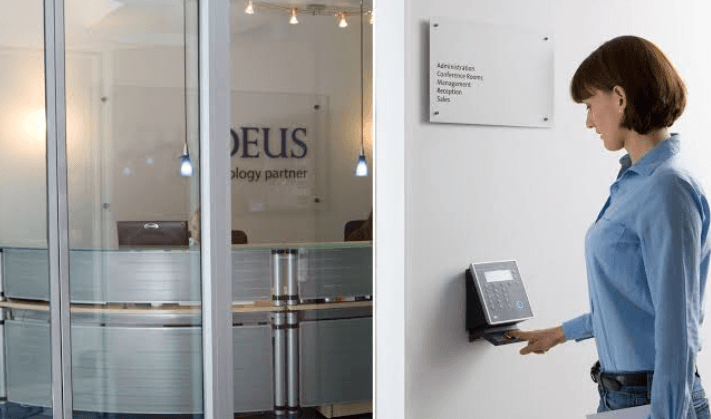
Biometric hardware replaces badges and PINs with unique biological identifiers. Advanced systems utilize high-speed facial recognition cameras and dual iris scanning technology to authenticate workers instantaneously.
When an employee goes to clock in, the system captures their facial features or iris pattern, converting the visual data into an encrypted mathematical template. It then compares this live scan against stored records to verify identity in seconds. Since iris patterns and facial geometry cannot be borrowed, shared, or cloned, “buddy punching” becomes virtually impossible. Modern touchless units also offer a clean, hygienic clock-in process ideal for high-traffic companies and employee environments.
Automated Accuracy for Payroll and HR
Biometric systems do far more than verify identity at the door as they automate the flow of attendance data. When an employee logs a shift via biometric verification, that timestamp is instantly recorded in a centralized workforce platform.
This real-time automation delivers distinct operational advantages:
- Eliminates Manual Data Entry: Attendance data streams straight into payroll processing, removing manual keying errors.
- Accelerates HR Workflows: HR professionals no longer need to spend days chasing down missing punches or auditing timesheets.
- Ensures Regulatory Compliance: Precise digital records build audit-ready trails, helping businesses adhere to fair labor laws and overtime rules.
Key Considerations When Selecting a System
Choosing the right biometric timekeeping solution requires evaluating several operational factors:
- Workforce Size and Environment: High-volume facilities or rugged industrial environments require durable, fast-processing hardware with touchless technology.
- Integration Capabilities: Ensure the hardware natively connects with your existing scheduling, workforce management, and payroll platforms to maintain unified data.
- Accessibility and Privacy: Select equipment with clear accessibility features and robust data encryption to safeguard employee biometric information.
See also: Building Long-Term Business Stability Through Structured Governance Practices
Connect Attendance, Scheduling, and Payroll
Accurate, automated timekeeping is the true foundation of efficient workforce management. Upgrading from manual timesheets to modern biometric time clock software eliminates costly time theft like buddy punching, safeguards payroll accuracy down to the minute, and frees your HR and administrative teams from the burden of tedious paperwork.
Take the next strategic step toward a frictionless workforce operations model. Explore a comprehensive, end-to-end time clock solution today that seamlessly unifies attendance tracking, employee scheduling, and payroll processing into a single centralized system.