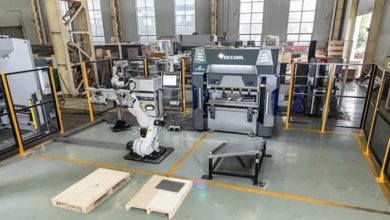
Automation technology is reshaping employment landscapes across various sectors. While it enhances productivity and efficiency, it also leads to significant job displacement, particularly among low-skilled workers. This creates a pressing need for reskilling and upskilling as new roles emerge in tech-centric fields. The tension between job security and technological advancement raises critical questions about the future workforce. How can society respond to these changes while ensuring equitable opportunities for all?
The Impact of Automation on Job Displacement
As automation technology continues to evolve, its implications for job displacement have become increasingly significant.
Numerous studies indicate a correlation between automation and reduced job security, particularly in low-skilled sectors. This trend exacerbates economic inequality, as displaced workers often struggle to find equivalent employment.
The erosion of stable jobs contributes to a widening gap between those who adapt to technological advancements and those left behind.
See also: How Artificial Intelligence Mimics Human Thinking
Emerging Job Opportunities in an Automated World
The displacement of jobs due to automation prompts a reevaluation of the labor market, revealing not only challenges but also potential opportunities.
Industries increasingly leverage robotic assistance, leading to roles in maintenance, programming, and oversight.
Additionally, digital entrepreneurship flourishes as individuals utilize technology to create innovative businesses.
Consequently, a shift toward tech-centric job landscapes may enhance overall employment prospects in an automated world.
The Role of Reskilling and Upskilling in the Workforce
While automation reshapes the employment landscape, the necessity for reskilling and upskilling has become increasingly evident.
Reskilling programs play a pivotal role in enhancing workforce adaptability, enabling workers to transition into new roles created by technological advancements.
Research indicates that businesses investing in employee development not only improve productivity but also foster a resilient workforce, better equipped to navigate the challenges of automation.
Balancing Efficiency and Employment: A Path Forward
Although automation offers significant efficiencies that can enhance productivity, it also poses challenges to employment stability, necessitating a strategic approach to balance these competing interests.
To maintain job security, organizations must prioritize workforce adaptation through targeted reskilling initiatives. By fostering a culture of continuous learning, businesses can empower employees, ensuring they remain relevant in an evolving job market while optimizing operational efficiency.
Conclusion
In conclusion, the complex interplay between automation and employment underscores a critical crossroads for the workforce. As job displacement becomes increasingly prevalent, a proactive pursuit of reskilling and upskilling emerges as a pivotal pathway to prosperity. By fostering a flexible framework that balances efficiency with employment, society can navigate the nuanced landscape of technological transformation. Ultimately, this dual approach can cultivate a culture of continuous learning, ensuring that workers remain relevant amidst the relentless tide of innovation.